

Updated:
Originally Published:
Updated:
November 19, 2026
Utilities face a difficult balancing act.
Aging electrical infrastructure must be modernized to meet growing demand, improve reliability, and accommodate new technologies. Yet many of the substations most in need of upgrades are also among the most critical to maintaining uninterrupted electrical service. Taking them offline for months, or even weeks, simply isn't an option.
Nevertheless, the pressure to modernize is growing fast. According to the U.S. Department of Energy's 2023 National Transmission Needs Study, within-region transmission deployment may need to increase by 20% by 2035 under a moderate-growth scenario, or by as much as 128% under a high-growth scenario. Meanwhile, the University of Wisconsin reports that approximately 70% of existing transformers are already more than 25 years old, increasing vulnerability to failure.
Realistically, such demand will only be met with significant brownfield work. That means expanding and rebuilding existing facilities while simultaneously keeping much of their infrastructure operational.
Brownfield projects are more complex than other types precisely because construction proceeds around an operating electrical system whose physical configuration, outage constraints, and historical documentation dictate what can happen, where, and when.
Fortunately, a series of smart practices, proven in real-world situations, can make brownfield construction safer, more efficient, and more successful in meeting operational goals.
To start, a brownfield design is only as reliable as the team's understanding of existing conditions. Unfortunately, decades-old substations rarely present a complete, straightforward picture. Drawings may be outdated or incomplete, equipment installed in different decades may reflect different engineering practices or standards, and sometimes the station was built by a different utility than the one that currently owns it. Worse, subsequent under-documented modifications can introduce configurations that aren't apparent from the original design documents.
This kind of divergence between the actual station and its documentation became apparent during a substation project where Beta Engineering helped rebuild and expand a critical facility serving multiple 345kV and 138kV transmission lines in Texas.
There, Beta’s engineering and project management team encountered equipment spanning multiple generations, including electromechanical relays dating to the 1980s alongside more recent microprocessor-based equipment. Integrating these systems into a modernized station required understanding not only the equipment itself but also the design practices and operating requirements associated with each generation.
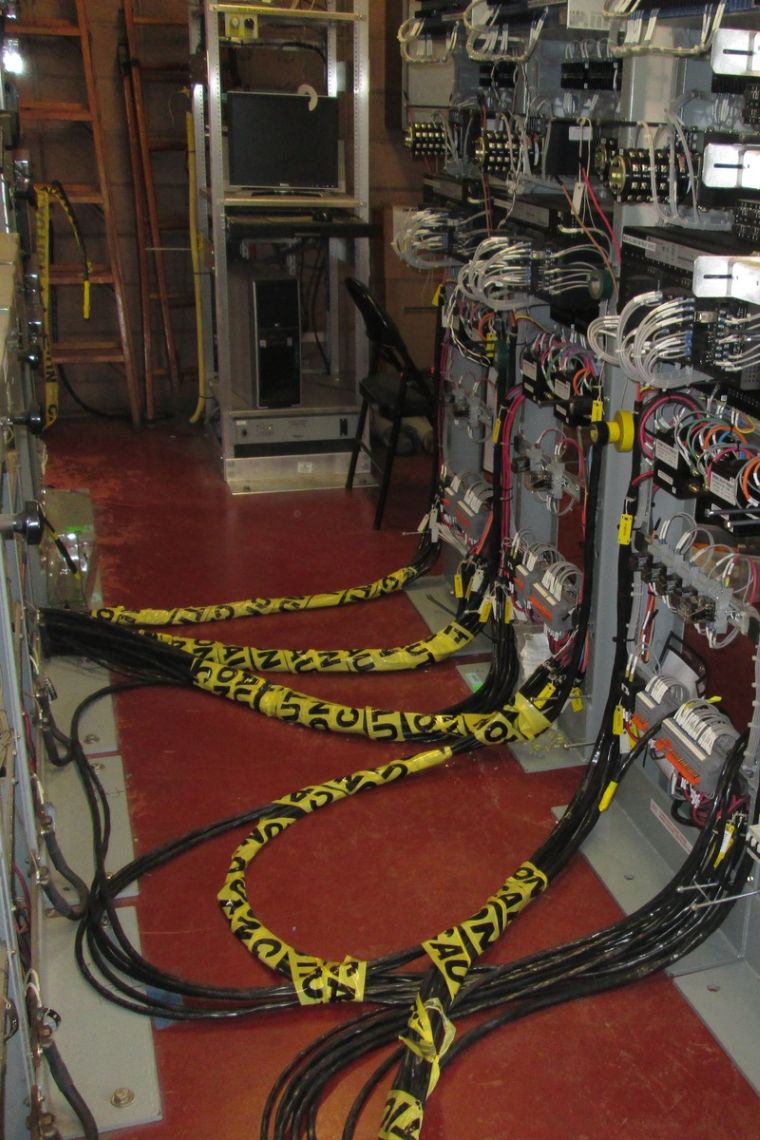
That understanding begins with thorough field investigation.
When we interviewed the primary electrical engineer on the project, he recommended budgeting for multiple site visits rather than assuming engineers can document everything during a single inspection.
“You should do your best to get everything on the first site visit, but unless it’s an extremely simple job, you’re going to miss something,” he says.
That’s because initial visits often raise questions that become apparent only after engineers return to their drawings and begin developing the design. Additional visits provide opportunities to resolve those questions before they have a chance to become construction problems.
Another valuable resource is institutional knowledge. At the same project, the team worked with a longtime maintenance professional whose familiarity with the station helped explain existing configurations and the reasoning behind past modifications.
“Try to find someone who’s familiar with that station in particular,” Beta’s electrical engineer advises. “Use them as a resource for why things are the way they are.”
A separate project, this one based in California, illustrates the same principle from a different perspective. There, Beta constructed a replacement 69/12kV facility alongside an operating station before building a new 230kV station. Beta Engineering had stepped in after another EPC contractor departed, inheriting construction documents that were already nearly complete.
But not entirely: despite their advanced stage of completion, the documents lacked important details, particularly related to grounding. For example, Beta’s team quickly realized that underground conditions differed from what the drawings indicated. Crews ultimately had to conduct extensive potholing in the 12kV yard and redesign underground duct routes to accommodate the infrastructure they encountered.
The lesson is straightforward: Investing more time in investigation before construction can reduce costly redesign and delays later. That means budgeting for repeat visits, examining existing infrastructure closely, and involving personnel who understand the station's history.
On a greenfield project, contractors generally have considerable freedom to organize construction around access, productivity, and efficiency. Brownfield projects introduce a different governing constraint: much of the existing electrical infrastructure must remain energized throughout construction.
That affects virtually every activity. For example, minimum approach distances, electrical clearances, switching requirements, and work-zone boundaries affect where crews operate and what equipment they can access. Even seemingly routine construction activities might require outages or temporary protective measures when performed near energized equipment.
At the 345kV brownfield site, Beta had enough available space to construct substantial portions of the new station before dismantling the existing facilities. That provided an important starting advantage, but it didn't eliminate the need for complex sequencing.
The team first constructed new infrastructure in available areas. Existing transmission connections were then repositioned or transferred in stages, allowing portions of the old station to be de-energized and demolished one at a time. New higher-capacity transformers and a new bus configuration provided additional flexibility by allowing power to continue flowing while specific bus sections were unavailable.
“The work could be completed in one go, but we had to sequence how we tied into the main station,” explains Beta’s project manager on this brownfield rebuild.
Temporary electrical arrangements were essential to this process. The station needed to continue functioning reliably not just before and after construction, but through every intermediate configuration.
The 230kV California project followed a similar principle, albeit through a different physical arrangement. There, Beta first constructed replacement 69/12kV facilities adjacent to the operating station. Once those facilities were ready, service could be transferred and the old 69kV equipment removed. That freed the footprint needed to construct the brand new 230kV station.
The changing construction footprint also required repeated adjustments to temporary fencing that separated active electrical infrastructure from construction areas.
For project owners and contractors, this means that construction sequence is an engineering challenge rather than just a scheduling exercise. In other words, don't simply develop the final-state design. Engineer the intermediate states. Every temporary configuration has to safely function as a real substation configuration until the next stage can occur.
An outage plan isn't merely a construction schedule with outages inserted into it. Outage availability can determine the construction schedule itself. Complicating matters, however, an outage that appears feasible during preliminary planning may later be shortened, rescheduled, or denied because of changing grid conditions. Seasonal restrictions can further reduce the available windows.
Consider the 345kV station. Because the station serves critical transmission infrastructure, proposed outages were subject to review based on regional operating conditions and reliability requirements. The original construction approach anticipated overlapping outages involving 138kV and 345kV facilities. However, the independent system operator determined that taking certain elements out of service simultaneously would create unacceptable contingency exposure.
As a result, the team had to revise its approach, with outages sometimes becoming unavailable even after they had initially appeared workable. In retrospect, Beta’s project manager says the station would have benefited from planning around smaller, more sequential outages from the beginning: “Understanding that up front, we would have backed up and tried to take down just the minimum.”
In other words, the most efficient brownfield project isn't necessarily the one requiring the fewest construction steps. It may be the one whose steps create the least dependence on any particular outage occurring exactly as planned, potentially by dividing work into smaller increments rather than seeking one or two long outages.
Another important strategy is maximizing work completed before an outage begins. Foundations, structural steel, control panels, equipment preparation, and eligible testing activities should be completed outside outage windows whenever practical and safe. That allows the limited outage period to focus on work that genuinely requires equipment to be de-energized.
For owners and project managers, several additional practices can improve outage planning:
Ultimately, outage availability should be treated as a fundamental design and project-planning constraint, not a scheduling detail to resolve after engineering is complete.
Even a carefully engineered construction sequence can encounter difficulties if the transition from existing to new infrastructure isn't thoroughly coordinated between all relevant parties.
A cutover is more than the moment electrical service moves from one piece of equipment to another. It involves construction readiness, switching orders, testing, commissioning, inspections, utility approvals, and the availability of personnel from multiple organizations.
Unfortunately, the California project presented a particular challenge in this respect. Inherited documents did not include a sufficiently developed cutover plan.
“If I could go back,” the Beta project manager on this rebuild says, “I would have demanded a clear, well-thought-out cutover plan.”
Especially in a situation like this, whole-team coordination became essential. Beta's contractors needed to align their schedules with the customer’s internal personnel, including those responsible for switching, testing, commissioning, and operational approvals. One organization's work frequently depended on another organization's activities being completed first.
The solution was to bring those responsibilities into a shared planning process where the schedule essentially became the coordination mechanism. So, rather than scheduling only Beta's subcontractors, Da Silva incorporated the utility's internal resources and other stakeholders into the master project schedule. The team reviewed that schedule weekly and, when necessary, twice weekly.
That shared visibility became especially important when unexpected underground conditions required design changes. Open communication helped the participants understand the consequences, coordinate their responses, and avoid turning schedule challenges into disputes over responsibility.
“We formed a team, and that’s what I’d really emphasize,” Beta’s project manager on the 230kV project says. “Everyone was an integral part.”
The lesson extends beyond cutover scheduling into broader team integration.
These practices help transform the cutover from a collection of loosely coordinated tasks into a unified operation with shared expectations and clear responsibilities.
Ultimately, the best brownfield plan isn't one that assumes engineers have eliminated every uncertainty before construction begins. That's impossible on decades-old infrastructure. Instead, successful teams reduce the uncertainties they can, expose the remaining ones early, and create enough flexibility to respond without compromising safety or reliability.
That adaptability shouldn't be confused with accepting inefficiency. In brownfield construction, adaptability is often what makes efficiency possible. Thorough investigation reduces redesign. Flexible sequencing limits dependence on outages. Early coordination helps produce workable schedules. Integrated cutover planning keeps engineering, construction, and utility operations aligned.
Together, these practices enable project teams to accomplish the central challenge of brownfield modernization: rebuilding critical electrical infrastructure while maintaining the service that infrastructure exists to provide.


