

Updated:
Originally Published:
Updated:
February 17, 2026
________________________________________________________________________________________________
Designing strong, safe substations starts long before the construction crew walks on site. And it begins below the surface.
Whether you’re a utility who regularly builds substations or a data center or renewable developer figuring out where to start, this guide is for you. Below, learn what to look for (soil types and subsurface conditions) and how to prioritize needs (budget and schedule) to ensure your project’s success.
Drilled shafts (also known as drilled piers) are often a popular foundation choice because they can be installed quickly. Construction crews drill a circular hole, place a rebar cage inside, fill the hole with concrete, install anchor bolts in the top, and use these to attach the structure to the foundation.
This type of foundation is typically used for tall structures within the substation yard, such as single- or multi-leg structures and transmission line termination structures—offering deep anchoring support with a small surface area.
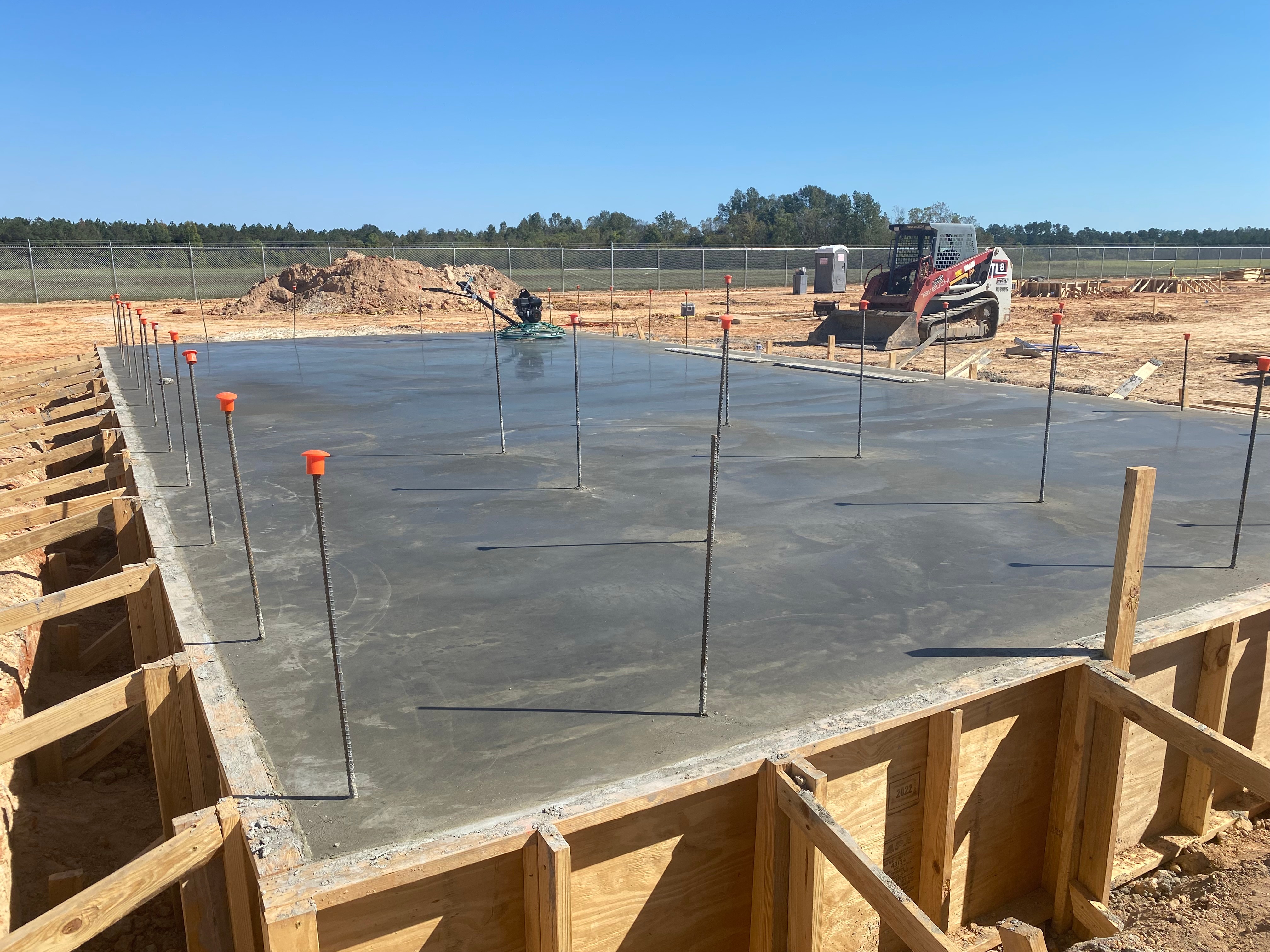
Pad foundations, or slab on grade foundations, are the shallowest substation foundation option (usually only extending 0.5 to 2.0 feet below grade). They are often used for transformers and other equipment within the substation yard that require a large surface area for support.
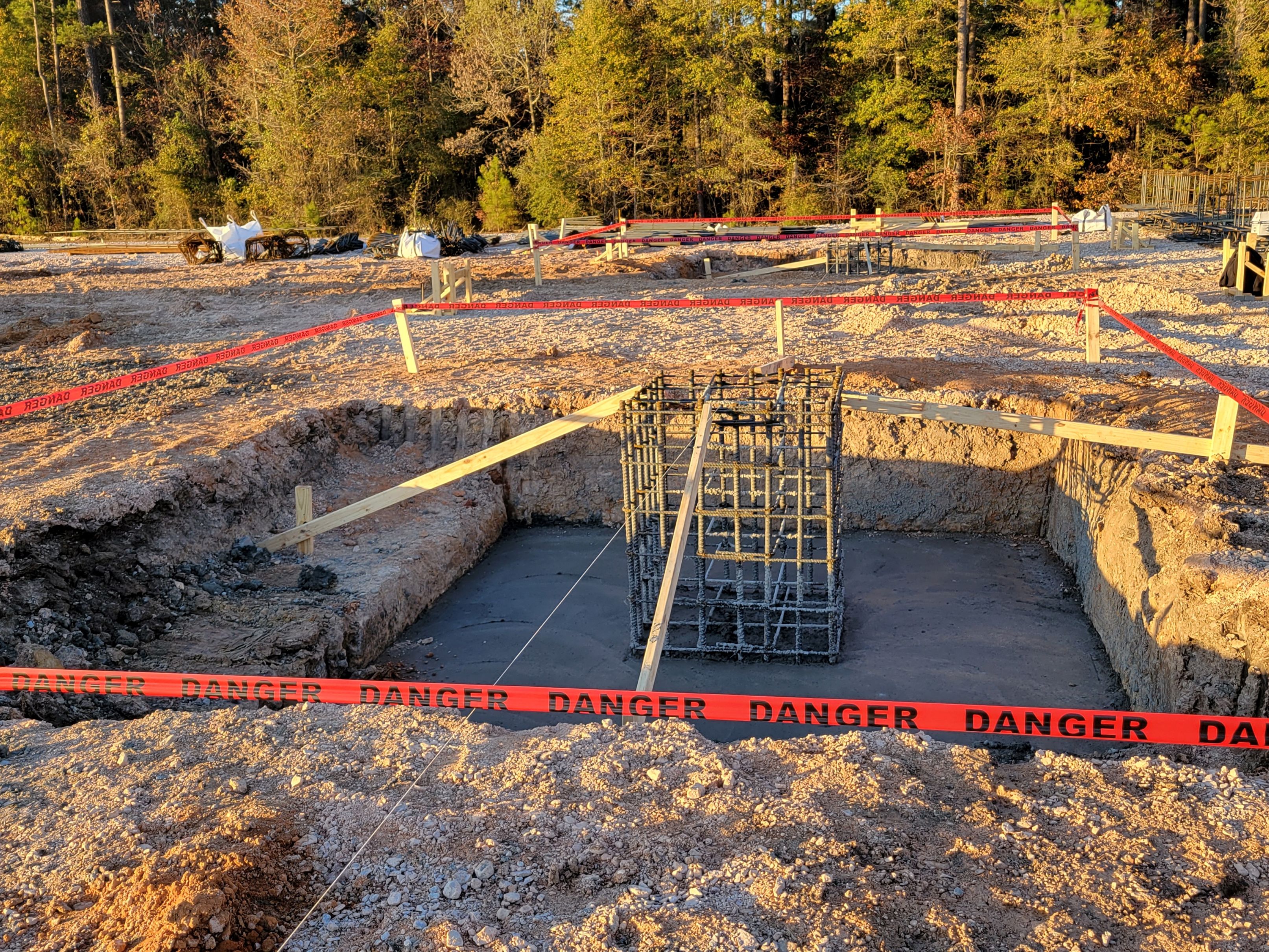
Spread footings are deeper than pad foundations, but still a relatively shallow option at about 3 to 4 feet below grade. Crews dig a hole, add rebar, and pour a base (usually square or rectangular). Then, they form a pier on top of the base that extends above grade.
This kind of foundation works well in conditions with a lot of subsurface rock (or the potential for it) below grade. Spread footing foundations reduce the amount of rock removal exposure while offering a strong foundation.
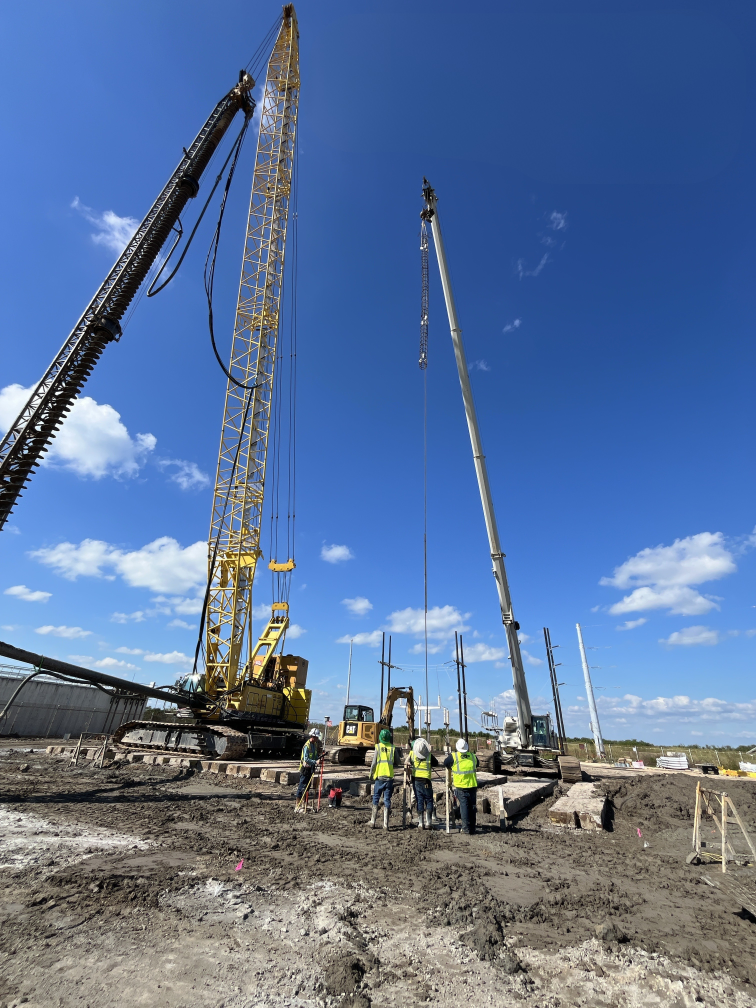
Driven pile foundations consist of a cluster of deep piles that are hammered into the ground with a pile driver (usually made of steel, concrete, or wood). Then, a pile cap and pedestal are installed on top of the pile, and equipment is anchored to the pedestals. The piles are usually long pieces of precast concrete, wood, or steel pipe (often 20- to 40-feet long). For deep foundations, one segment is driven into the ground, then the next one is affixed to the top of the previous one, and the process repeats.
Alternatively, you can drive treated timber piles. In this case, you would drill a hole through the top of the wooden pile, insert a piece of rebar in it horizontally, and cast the foundation around that.
Video: 126-foot driven piles for substation project in active seismic zone
Auger cast pile foundations are installed by drilling an auger into the soil to the designed depth, with concrete or grout pumped through the hollow stem within the auger to fill the cavity created as the auger is removed. A reinforcement rebar cage is placed through the fresh concrete. Then, a pile cap and pedestal are installed on top of the pile, and equipment is anchored to the pedestals.
Helical piles (also known as helical anchors) are essentially large screws that are rotated (screwed) into the ground. Then, a base plate is welded to the top, and the substation equipment is mounted onto the base plate.

As this guide outlines, the driving factors for substation foundations are soil types, subsurface conditions, and balancing design needs with cost and schedule constraints. Using the insights above, you can make more informed decisions and identify the next steps to take as you plan, engineer, and build future substation projects.
Have questions? Reach out to Beta Engineering’s team of EPC experts to ensure your next RFP is set up for success.
Beta Engineering is a substation EPC company headquartered in Pineville, LA, with an office in San Diego. Since 1975, we’ve helped utilities, renewable developers, and other power delivery companies across the U.S. complete high-voltage substation and transmission line projects. Contact our team to tap into 50+ years of problem-solving experience—and a proven commitment to safety.


